
LET’s WORK TOGETHER
OUR SERVICES
01
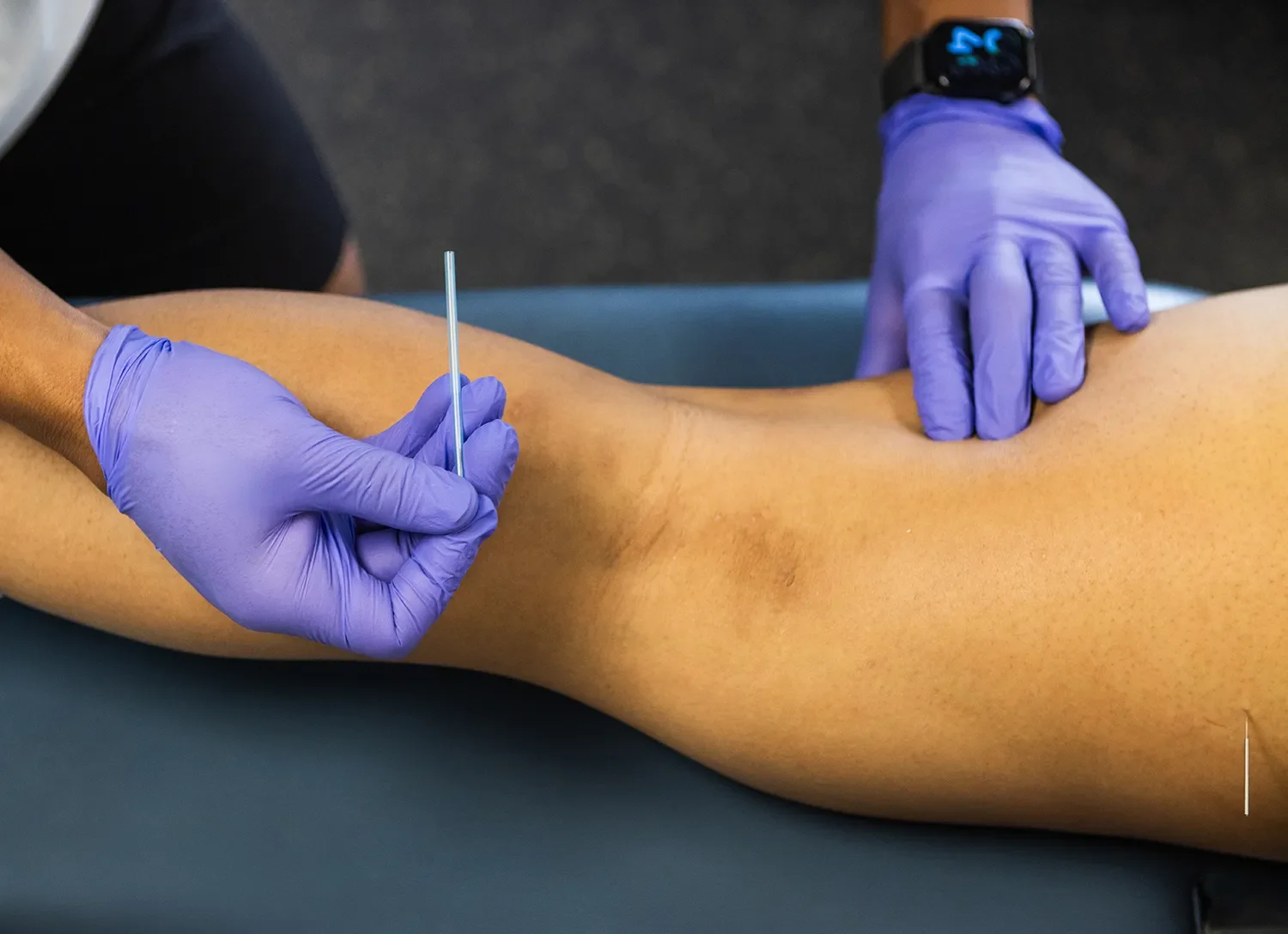
Dry needling
Dry needling is a skilled technique where a thin, solid monofilament needle is placed directly into muscle and connective tissue to treat pain and movement problems. It is not acupuncture. Where acupuncture comes from a traditional-medicine framework, dry needling is a modern, movement-based tool grounded in anatomy and neuroscience. Think of it as a control-alt-delete for a muscle: the needle can trigger a small twitch response that resets the muscle's resting tone, recruitment, and how the nervous system is protecting the area. We can also add electrical stimulation to the needles to improve pain, recovery, and/or neuromuscular changes.
-
Active people and fitness athletes dealing with stubborn muscle tightness, nagging trigger points, tendon irritation, or a spot that just will not release with stretching and foam rolling.
-
Reduced muscle tension and pain, improved range of motion, better blood flow, and a muscle that contracts and relaxes more easily. Many people feel looser right away, and it pairs with corrective exercise for lasting change.
-
Shoulder and rotator cuff, upper trap and neck, mid and low back, glutes and deep hip, quads and hamstrings, calf and Achilles, shin, foot, and forearm.
02
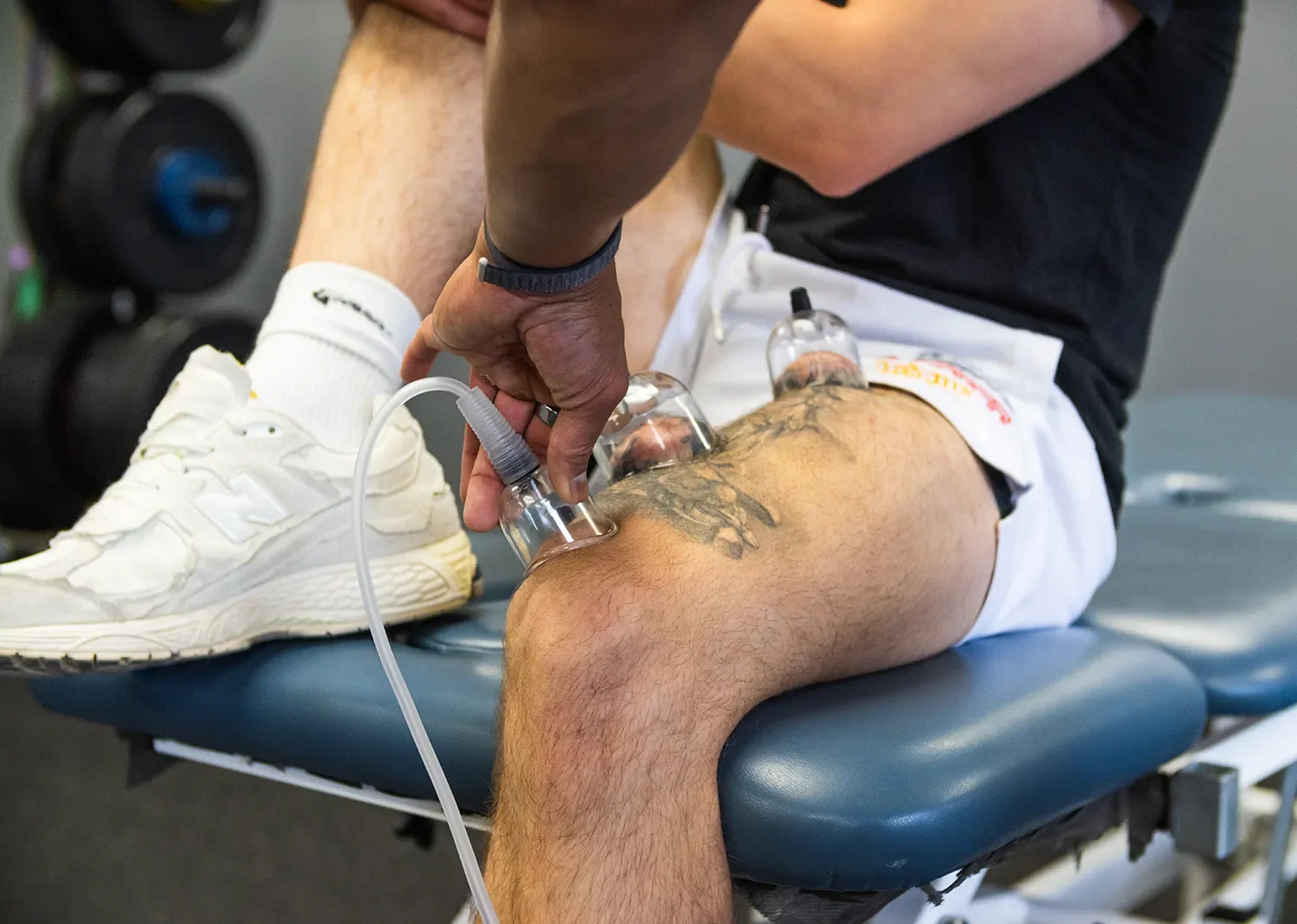
CUPPING (Myofascial Decompression)
This is not the passive, leave-the-cups-on cupping you may have seen. We use Myofascial Decompression, a negative-pressure technique combined with movement. Instead of just sitting still, you move while the decompression targets the specific fascial restrictions that limit how you move. That combination of lift-and-glide plus active movement is what separates it from traditional cupping and makes the change stick. Every session includes a before-and-after measurement so you can see the difference.
-
Athletes and active people with tight, restricted areas that limit mobility, common spots being the IT band, posterior shoulders, front of hips, and low back, or anyone whose old injury has left them moving around using a compensation pattern.
-
Improved mobility and range of motion, less tissue stiffness, better fascial glide, and cleaner movement patterns. In one imaging study, decompression measurably increased space around a runner's IT band, and the improvement held days later. We follow it with movement retraining so the gains carry over.
-
Quads and knee cap tracking, hamstrings and the whole posterior chain, upper trap and levator, posterior shoulder and lats, IT band, hip flexors, and low back.
03
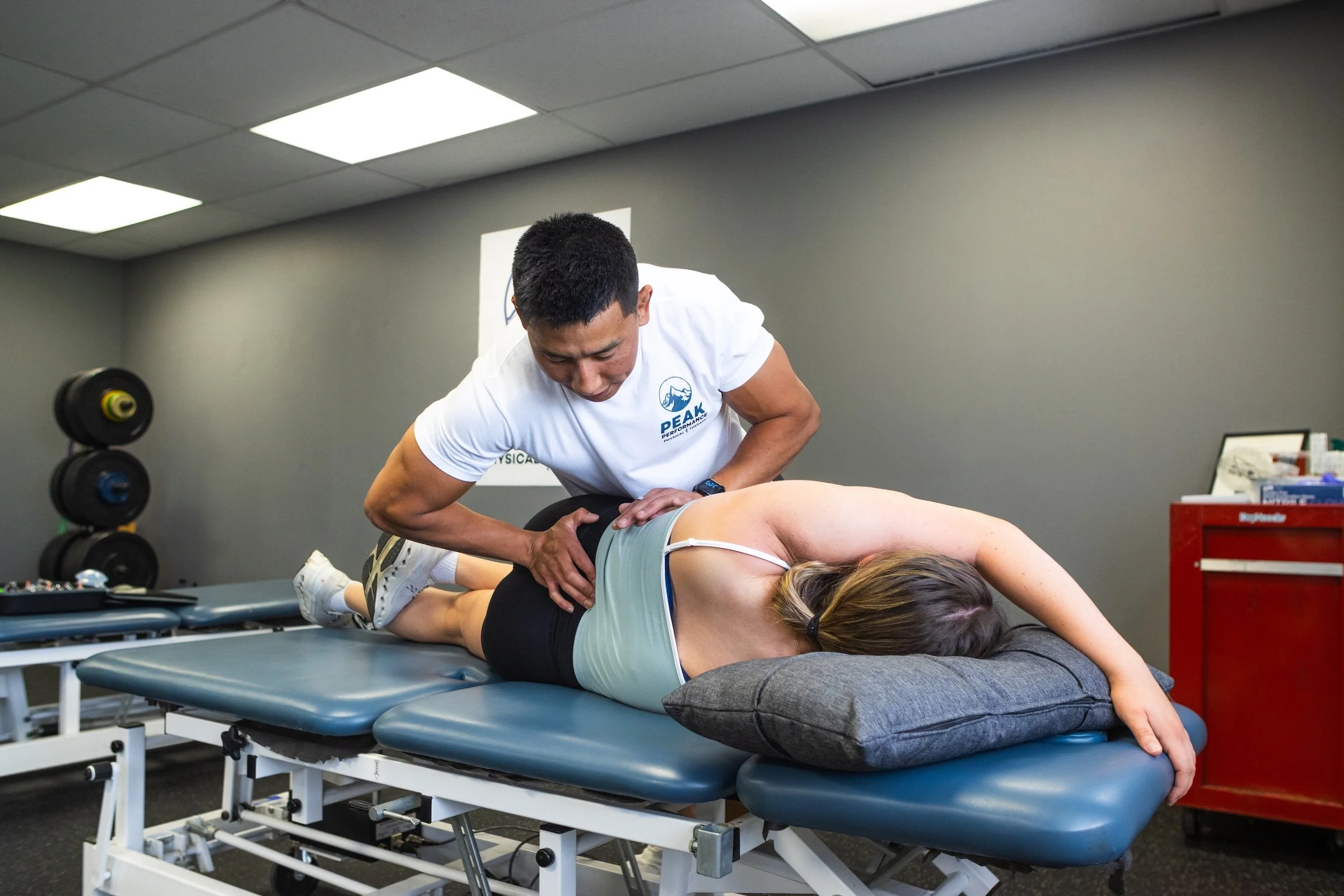
Manipulation
Manipulation is a precise, quick, hands-on thrust applied to a joint or the spine to reduce pain and restore movement. It is a skilled reset, not a random crack. And it does not need to pop to work, the research is clear that the benefit comes from the technique itself, not the sound. We use it selectively, only when the exam says it is the right tool, and always alongside exercise.
-
People with non-specific back, neck, or mid-back pain, stiffness, limited range of motion, or certain headaches, who want fast relief so they can get moving again.
-
A quick drop in pain, improved range of motion, and less muscle guarding, which opens a window to move without fear. We use that window to load and retrain the area so the relief lasts.
04
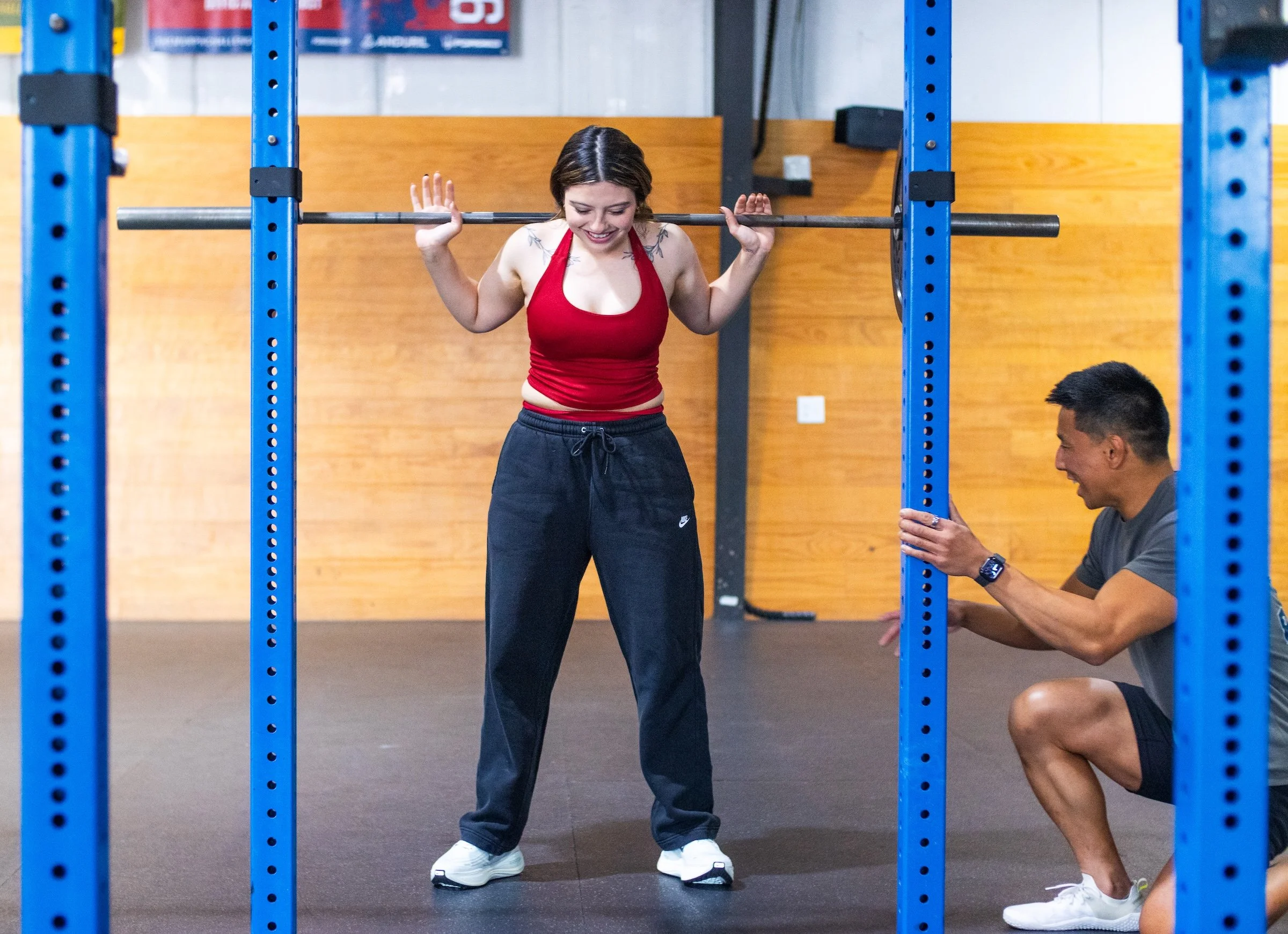
Personalized Exercise Program to Improve Performance
Our training philosophy is simple: manage symptoms to maximize fitness. Most rehab/doctors recommend resting from the weight room injury. We do the opposite, we keep you training while we treat the problem, using smart loading to actually heal the tissue. The question we ask is, how fit will you let us get you?
-
Fitness athletes across CrossFit, HYROX, F45, Orange Theory, weightlifting, and powerlifting who want to keep training through an issue and chase new goals, as well as people who are just getting started and want to change their life.
-
Stay in the gym instead of sitting on the sidelines, build and maintain real fitness, avoid the steep cost of rest and deconditioning, and work from a custom accessory program built for your goals. You also keep the community, the routine, and the mental-health benefits that come with training.
05
Running Analysis
Running injuries are extremely common, and most of them are not solved by rest or by strength work alone. Research is clear that hip strengthening and squat training by themselves do not change how you actually run. If the mechanics do not change, the problem comes back. A running analysis finds the specific mechanical fault driving your pain and retrains it.
-
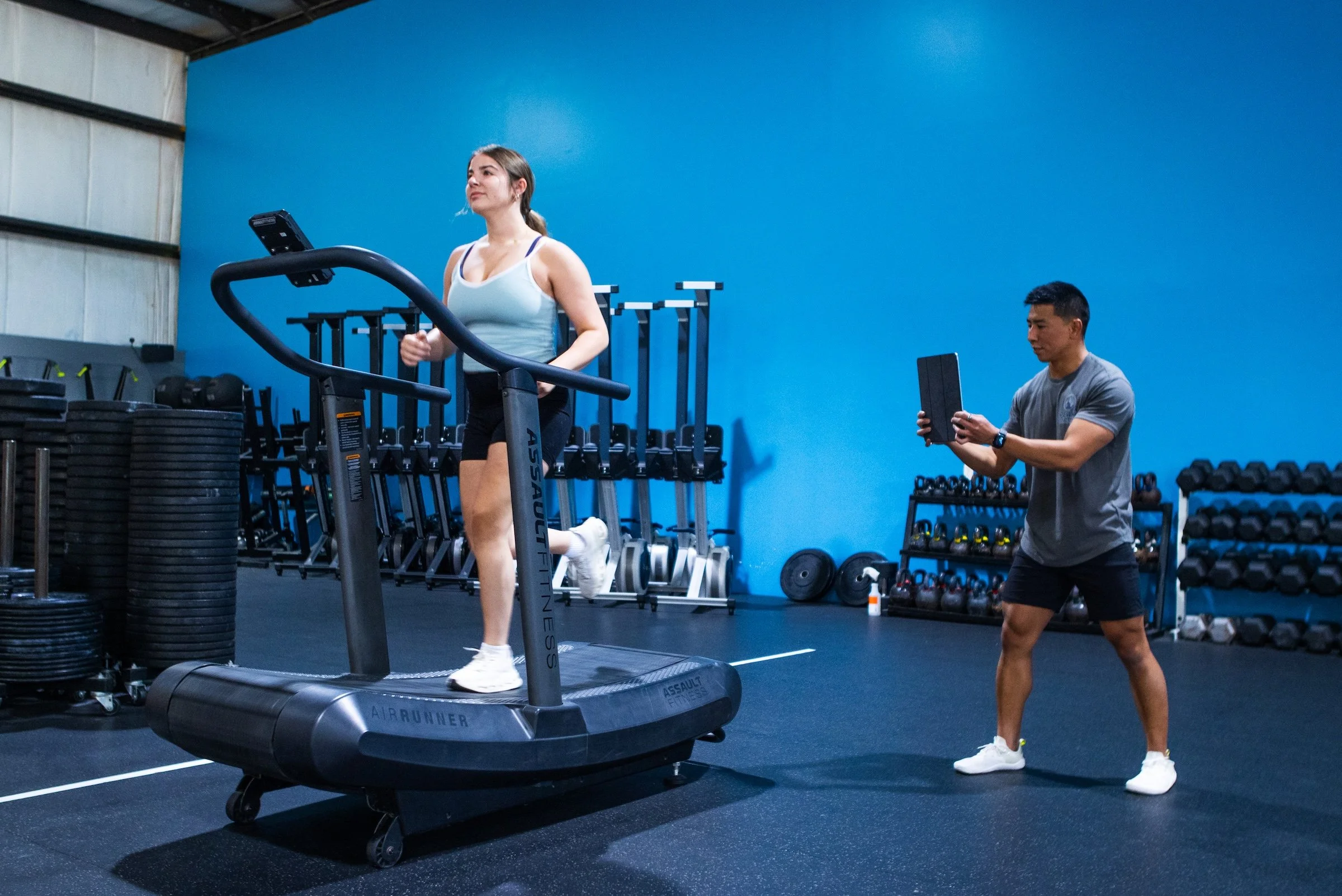
We film you running on a treadmill using slow-motion video from two angles: from behind and from the side. The human eye sees about 16 frames per second, a camera sees over 200, which is why we film rather than eyeball it.
We capture your baseline data: current pace, cadence (steps per minute), stride length, step width, footwear, and current pain level.
We then break your gait down frame by frame across two views.
-
Pelvic drop (Trendelenburg), knee separation, knee joint center alignment, foot position relative to your center of mass, femoral rotation, pronation, and heel whip.
-
Overstriding (where your heel lands relative to your body), strike pattern (rearfoot, midfoot, or forefoot), knee flexion at initial contact and midstance, trunk lean, ankle dorsiflexion, hip extension at toe-off, and how much your body bounces up and down.
-
Specific faults are tied to specific injuries. For example, excessive hip internal rotation and reduced trunk lean are linked to runner's knee. Increased hip adduction is linked to IT band pain. Narrow step width and prolonged pronation are linked to shin splints. Overstriding and high loading rate are linked to plantar and stress-fracture problems. Once we know which fault is yours, we can change it.
06
GAIT retraining
From there you get a specific retraining plan, which may include cadence changes, forward lean work, foot strike adjustment, or real-time feedback drills. The goals are to reduce impact and loading rate, increase knee flexion at contact, reduce excessive bounce, and redistribute load away from the irritated tissue. The point is to keep you running while you heal, rather than shutting you down.
-
Runners with recurring pain, anyone training for a race who wants to stay healthy, runners returning after injury, and runners who simply want to get more efficient.
-
A clear written breakdown of your mechanics, video you can keep, the specific fault driving your issue, and a retraining plan with drills. Follow-up filming shows the change on video.

Which Tool for Which Problem
FAQs
-
No referral needed. You can schedule directly and be seen for a full 60-minute evaluation with a Doctor of Physical Therapy. Iowa is a direct access state, so you can start care without a referral.
-
Cash-based means your care is not dictated by insurance. Visits are 60 minutes, one-on-one, focused entirely on your goals, not a billing code. We provide superbills upon request so you can seek out-of-network reimbursement from your insurer. HSA and FSA accepted.
-
Not at all. The majority of our patients are active adults, CrossFit members, runners, gym regulars, weekend warriors, who love training and do not want to stop. You do not need to compete professionally to work with us
-
Every case is different, but we give you a clear picture on your first visit. Most patients see meaningful improvement within the first few visits. Our goal is to get you better and keep you there, not to keep you coming back indefinitely.
Start your journey with us
Let us get to know You
You are here because you have an annoying pain that gets in the way of your training, of your life. Contact us and let us help you!